July 2026 AIR: Zsofi Valyi-Nagy
Zsofi! Glad you’re here and at LATITUDE! Your work is tackling a lot of different topics about AI, technology and seeing is believing. Can you describe how these elements interact with your practice?
Hi! Thank you so much for having me. I’m so excited to be back in Chicago this summer. Can’t wait to go swimming in the lake!
Technology and experimentation have been a huge part of my practice since I was a visual art major in college 15 years ago and I took classes in experimental animation and digital imaging with Scott Wolniak and Jason Salavon in DoVA at UChicago. From 2016 to 2023 I was working on a PhD in art history, where I focused on the histories of “new” media art––early video, analog holography, artists working with computers, that sort of thing. My dissertation was on Vera Molnar, who was a pioneer of what we now call generative art; she was experimenting with computers from 1968 through the early 90s. Grad school was really demanding, so my creative practice went on a little hiatus, but I never really stopped making, because I realized how essential it is to my research. For me, art history and practice are two sides of the same coin, especially when it comes to media art. I got really into media archaeology, which is all about using vintage or obsolete technologies to understand what it was like to work with them, in an embodied or phenomenological way.
So with all this AI discourse lately, I’m approaching it as both a historian and a maker. As a historian, I see how the anxieties we’re having around automation and its encroachment on creativity are by no means new, and that the criticisms of “AI art” are often reductive and don’t take into consideration how artists have critically worked in dialogue with computers since the 1960s. As a maker, I’m interested in the process of back-and-forth that we have with AI models which very much reminds me of early computer art practices––I’m talking early, way before the internet, when a computer was the size of several refrigerators and you had to share it with dozens of other users in a lab. Even then, working with computers was framed as a “conversation.” This is a central idea in my book manuscript on Molnar, which informs my creative practice, and vice versa.
Re: “Seeing is believing” – I answer in question #3.
How did your own experience navigating chronic illness and medical gaslighting shape the conceptual foundation of your work?
As I’m sure many artists with chronic illness and/or chronic pain can relate, a silver lining of having these conditions is that they provide a lot of material, lol. The experience is so nebulous and weird and frustrating, taking you out of “normal” space and time, that creating something you might call art can be a cathartic way of processing everything. It’s also led me to communities of people I wouldn’t have otherwise met, whose friendships and support I value deeply. Since I’m an academic and reading and teaching are a big part of my job, a few years ago I started devouring literature on critical disability studies, and now it’s become a huge part of everything I do. I learned about crip time, which is a way to think about how disabled bodyminds experience time outside of what the late queer theorist Elizabeth Freeman called “chrononormativity.” This really resonates with me because I feel like I’ve spent so much of the last ten years in doctors’ offices or on the phone with insurance, just waiting in this liminal space. I experienced a ton of medical gaslighting while seeking diagnoses for my health conditions, and I didn’t recognize it for what it was until I met other chronically ill friends who had been through the same thing. This experience heavily informed Feeling is Believing, a satirical infomercial and radio ad that I made last year as part of the Leonardo CripTech Incubator. In 2023 I started a long-form comic called HIGH FUNCTIONING that I share on Substack; it chronicles my arduous journey to diagnosis when I was moving around between Chicago, Paris, Berlin, DC, and LA for research and having to navigate all these different medical systems. It was fun to process all of that through drawing, which I hadn’t done much since I was a teenager, and through humor. All my favorite artists are funny––I think that’s why I feel so at home in LA, where the ghost of John Baldessari is everywhere––and it was important for me to explore the absurd humor of it all. I’d really like to publish the comic in book form someday.
As I explore (and explode) all this medical imagery in my work, I’ve been very invested in the idea of crip aesthetics, which was the title of an art history seminar I just taught at Scripps College, its title influenced by Latitude AIR alum Nat Decker, who is one of my favorite artists and a new friend of mine in LA. Defining crip aesthetics is a work in progress and will likely be my next book project. For those not so familiar with the terminology, crip is a term akin to queer, reclaimed by the disability community and used as both a noun and a verb to position disability as something desirable, not something to overcome. As Nat says in their interview with the Disability Archives Lab, it builds on Tobin Siebers’s earlier term disability aesthetics, which introduced disability as a critical framework for examining the history of art and conceptions of beauty. I love how Nat talks about the aesthetic value of “objects of disability,” how they are beautiful not “in spite of” their disability but because they are disabled.
What is an Intuitive Imaging Instrument? And how did you develop the concept for it?
When I was having debilitating joint pain a few years ago, I had extensive medical imaging done to try and determine what was going on: x-rays, MRIs, ultrasounds. None of these showed anything out of the ordinary, so I was misdiagnosed with osteoarthritis and told to go home and take more Advil. My PCP said my chronic pain was psychosomatic and referred me to a terrible psychiatrist who would confuse me with other patients.
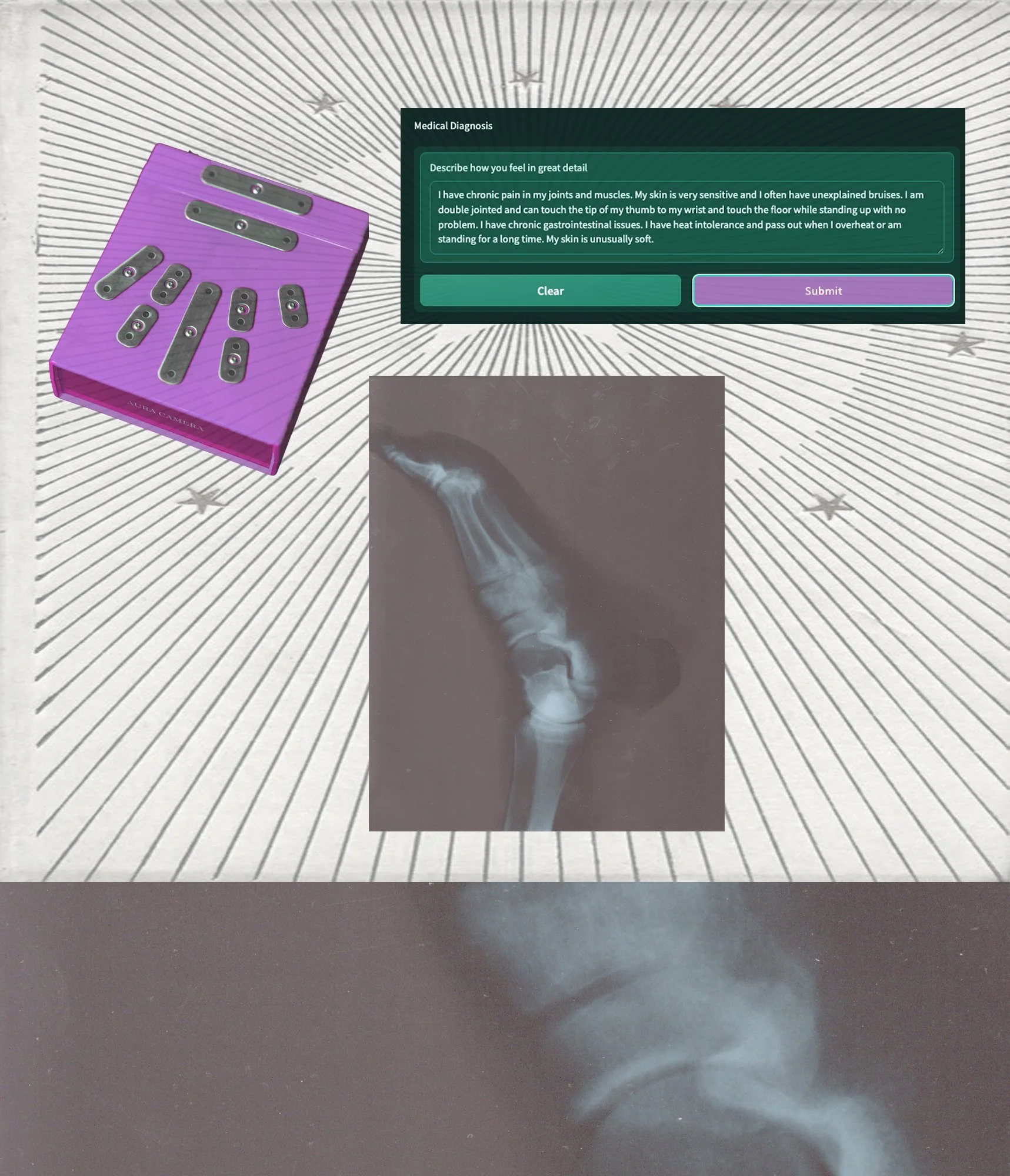
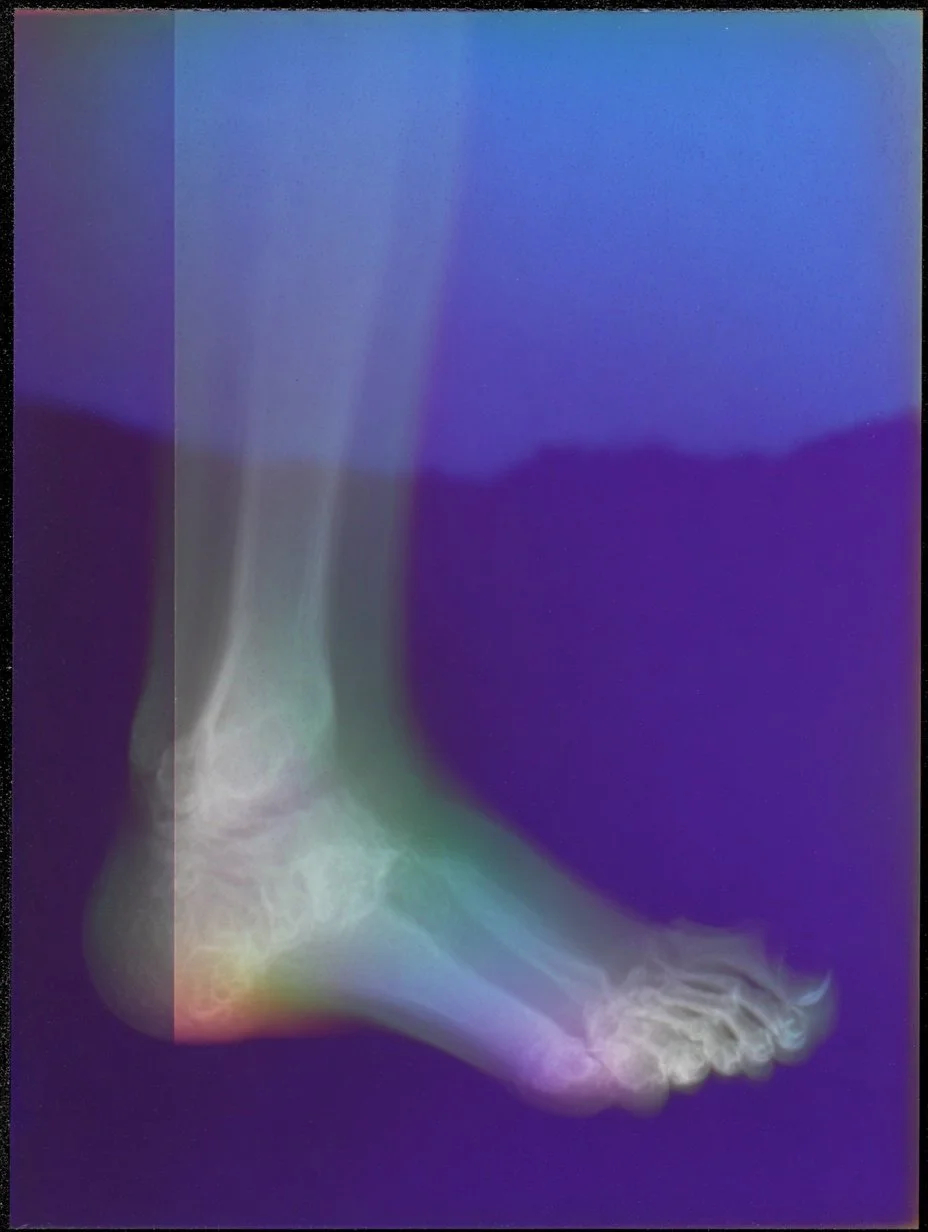
A couple years later, I was visiting my friend Ida in Providence, RI, and we went to see an aura photographer. I was so struck by this technology––this gigantic Polaroid camera attached to electromagnetic sensors that superimposes a unique color field over your portrait and prints out this guide to interpreting your results using ASCII art. I knew that this machine was “pseudoscientific,” but the image it produced of my body felt more real than anything I’d had done at a hospital.
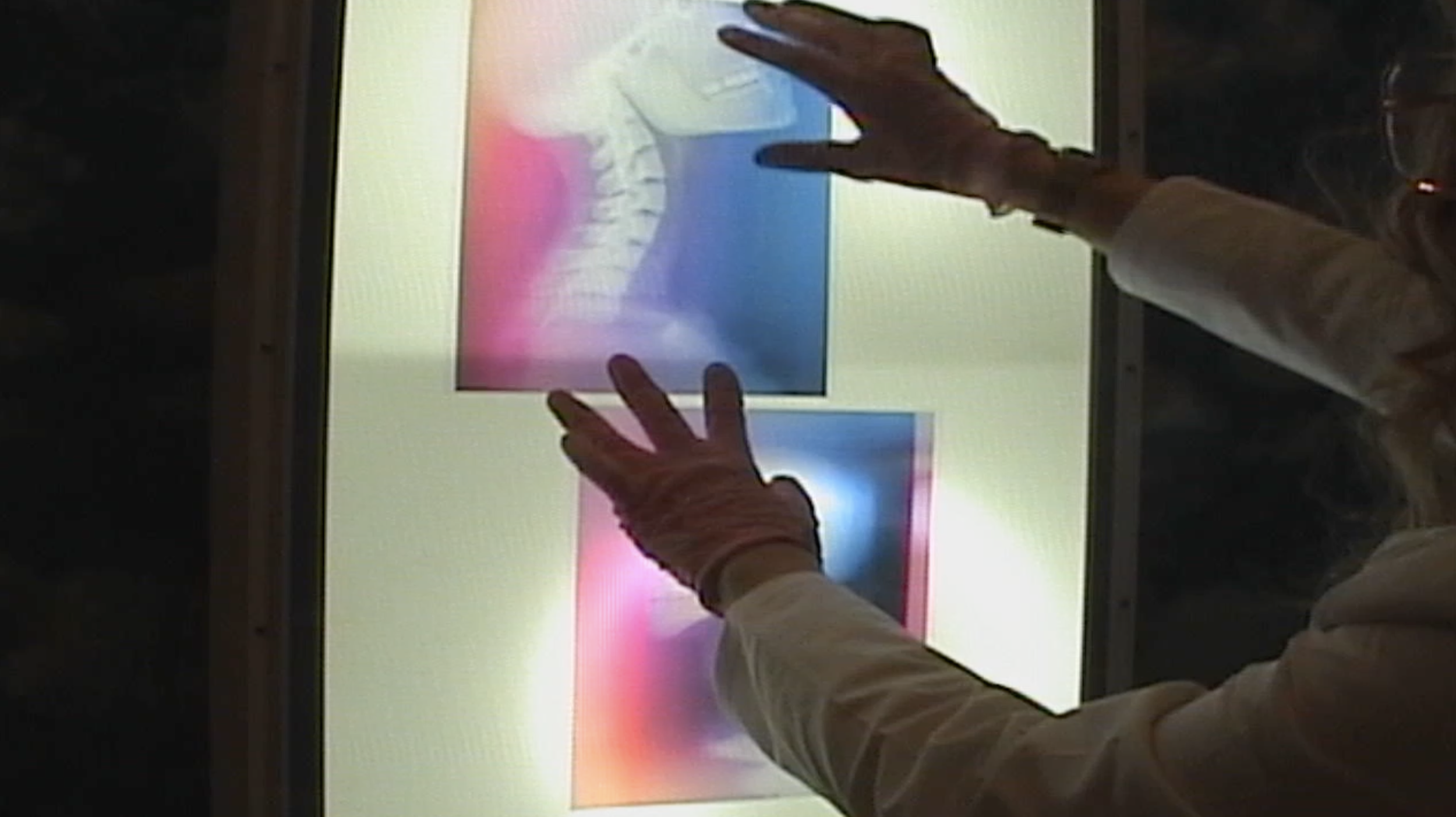
As an art historian, I was trained to support my arguments with “visual evidence,” and it struck me later that my doctors were doing the same––if they couldn’t see what was wrong, then I must have been making it up. Seeing is believing. Last year, I had the opportunity to be a part of the inaugural cohort of the Leonardo CripTech AI Lab, a fellowship for disabled artists working critically with AI. It was in this supportive space that I developed the idea for the Intuitive Imaging Instrument (the III, pronounced triple-I), which is a fantasy medical imaging device that can “see” any ailment. I made an infomercial-style TV ad and radio ad for the product, which you can view in our virtual exhibition “Slow AI,” curated by M Eilo. I play this big-haired doctorpreneur named Dr. Fifi Robinson who exists in a sort of time warp in which toll free numbers and TikTok doctors coexist. She is based in California, USA, which is where I live now and where I’ve encountered a lot of east-meets-west functional medicine doctors who promise you the world but then don’t accept insurance.
Dr. Fifi and the whole aesthetic of the video were heavily inspired by Guy Coggins, the creator of the AuraCam, who wears a lab coat and decorates his office in clouds and rainbows. For now, the III is a fantasy, a speculative fiction that offers a crip critique of the medical-wellness-industrial complex, but I am working on a prototype of the machine. I want it to be a wild little gadget that reads the energetic field of your body part that hurts and gives you tangible evidence of your pain, in the form of a beautiful image that you can take home with you.
Can you talk more about the performance side of your practice?
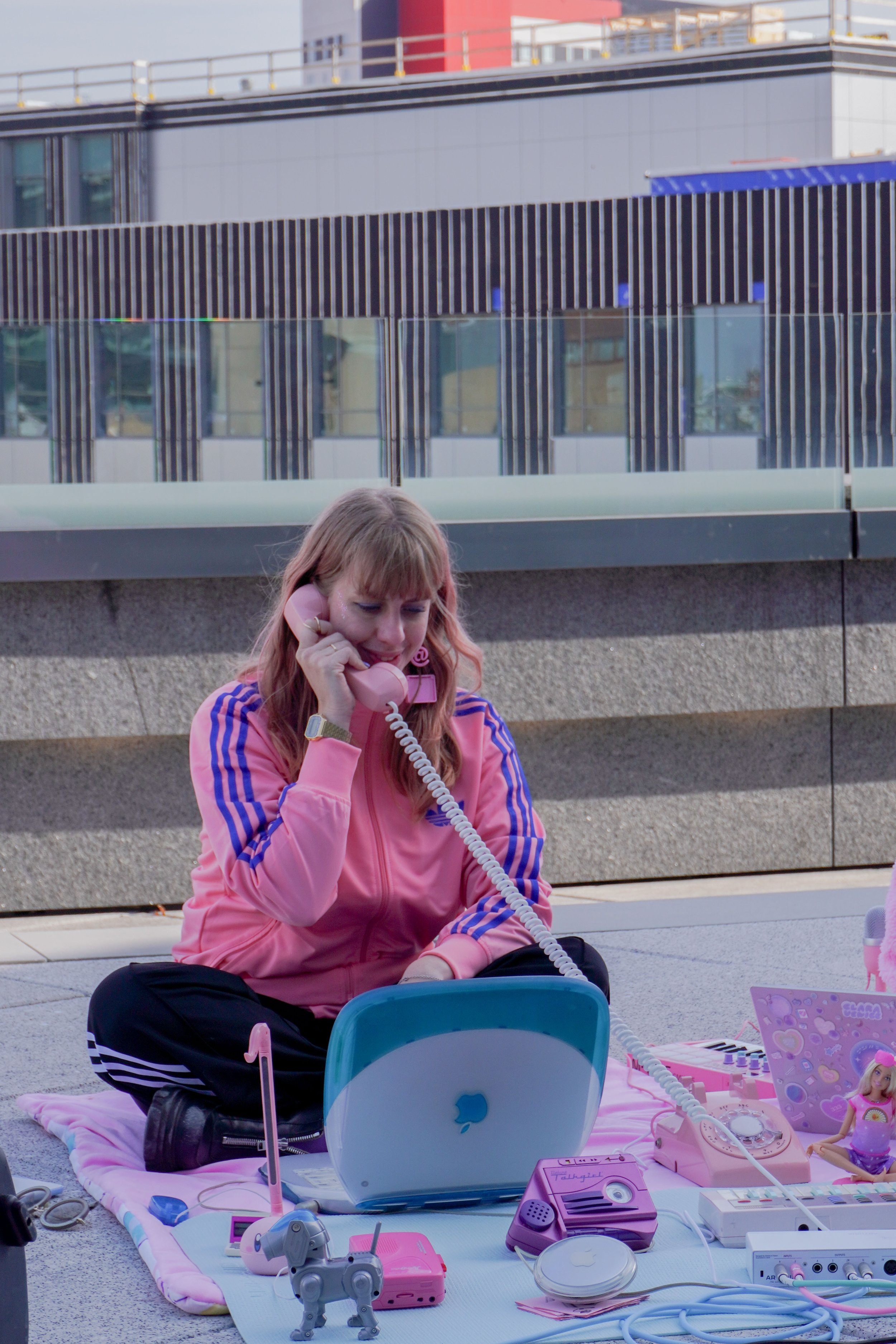
Performance is a newer thing for me, because for years I had crippling performance anxiety. I think being an academic and a teacher and having to give talks and lectures all the time has helped me feel more comfortable clowning around on “stage.” I’ve gotten to a place where I really like it. I started this collaboration called Soft Reset with my friend Clara Venice, who is an amazing musician and producer; she is known as “the theremin prodigy of Canada” and it’s true, she’s a total wizard. If you don’t know what a theremin is, it’s an electronic instrument that you play without touching; you control the sound by waving your hands around these two metal antennas. Together, we make ambient, electronic sound baths and guided meditations for people who can’t relax in traditional new age spaces. We call it new new age––it’s tapped into pop culture, it uses familiar sounds, it’s not culturally appropriative, but it is healing. I write and lead the meditations, which are for highly specific yet relatable situations like feeling overcaffeinated or confronting your unpaid parking ticket. We do soundbaths in person, using a spread of cute, “girly” vintage tech including Clara’s impressive collection of pink synthesizers and my prized teal y2K iBook, as well as virtually for the Soft Reset Meditation Club.
With Feeling is Believing, it’s been super fun to inhabit the character of Dr. Fifi Robinson, to record myself on my parents’ 2005 Sony Handycam, the same one my high school friends and I used to make ridiculous movies like a gender-bent spoof of Gossip Girl called Gossip Guy, which was my first stab at screenwriting. I love time-traveling through tech, and I think Dr. Fifi in particular offers a way for me to examine and critique the past, present, and future of healthcare in this country in a way that isn’t too depressing.
What current experiments are going on in and around your studio?
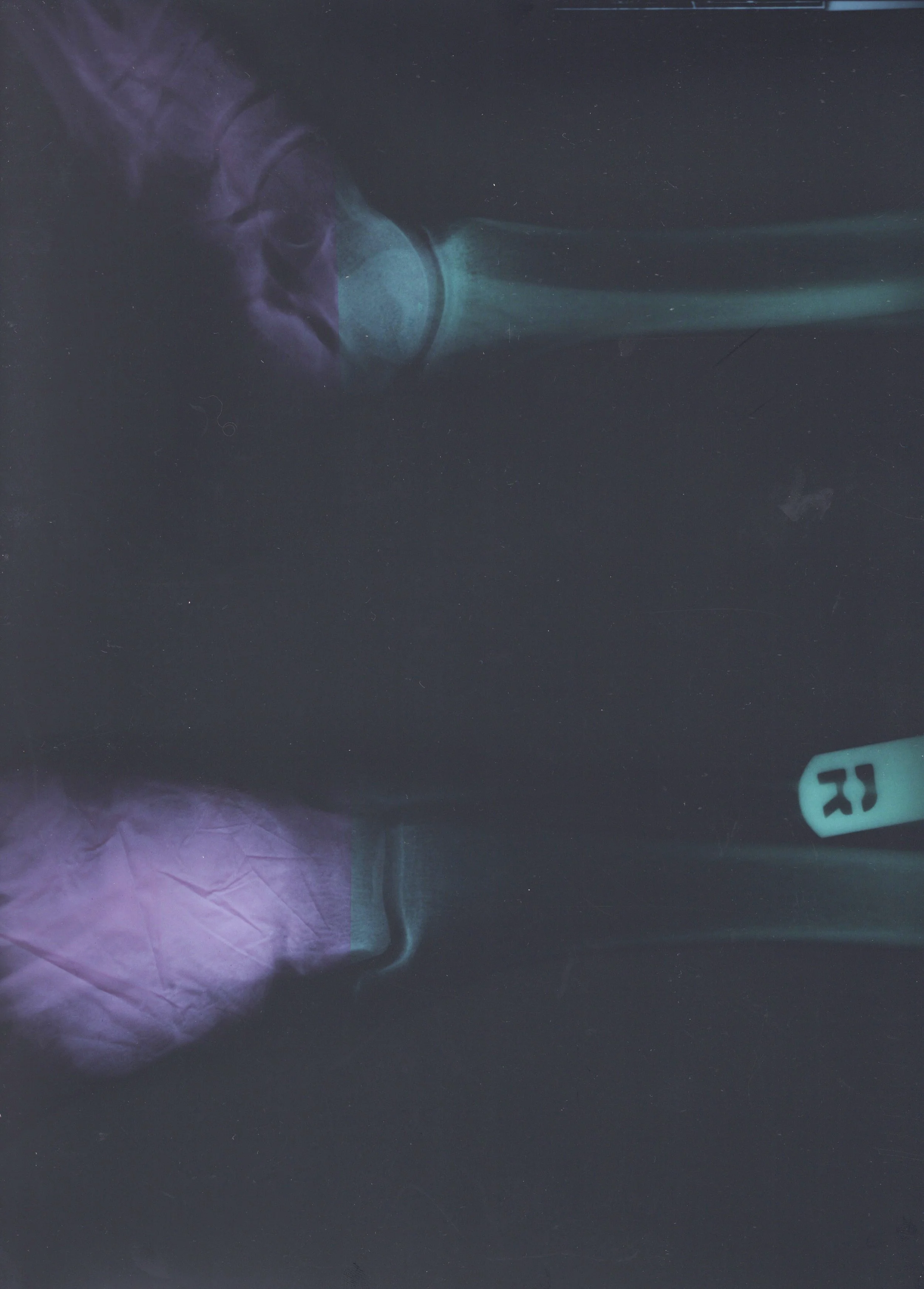
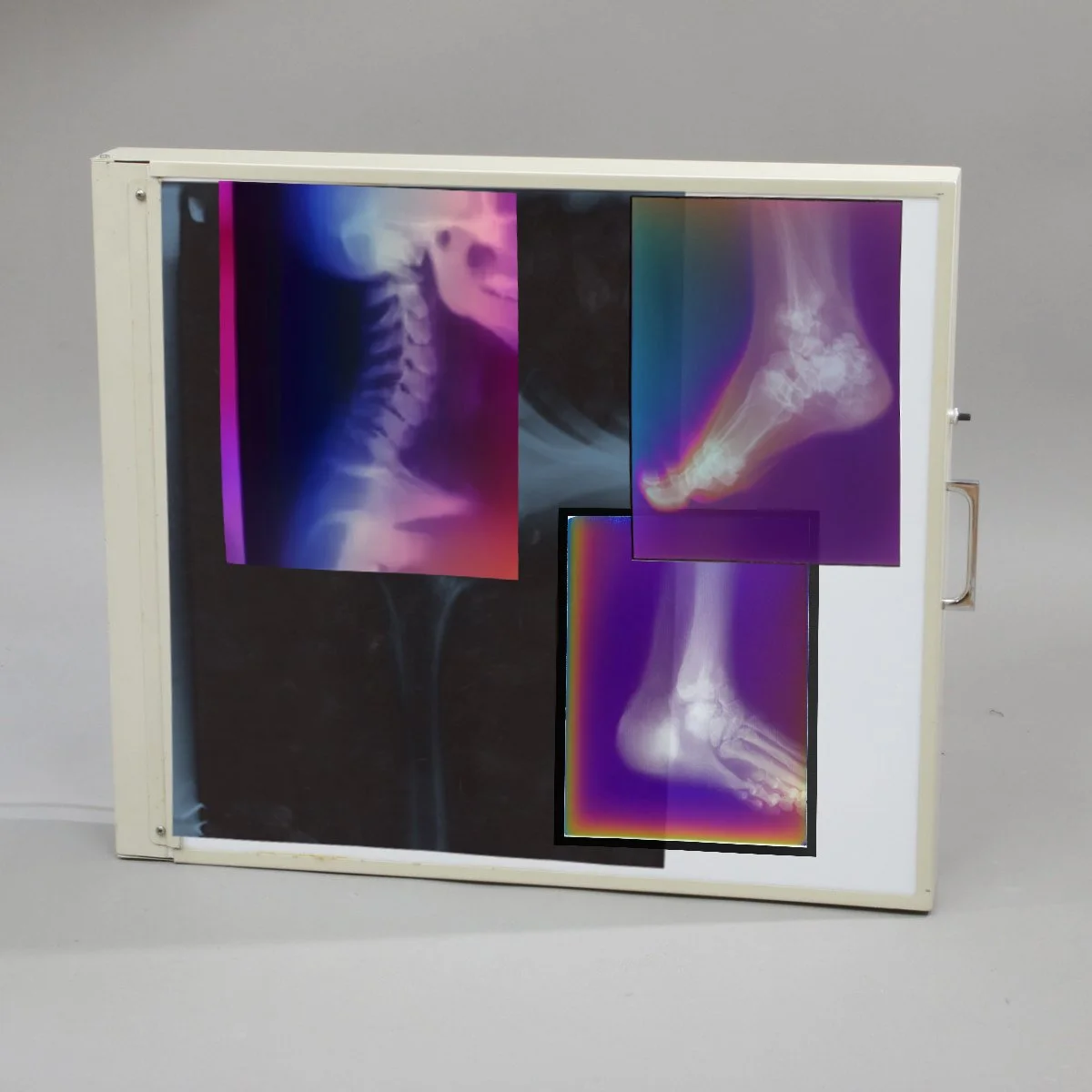
I’ve been making a lot of visuals for Soft Reset––music videos, album art, custom wallpapers and icon sets for soft resetting your devices as well as your nervous system. I’ve been experimenting with scanning found x-rays I bought on eBay along with materials I took from my recently-shuttered gynecologist’s office, such as pink nitrile gloves and exam table paper. I recently got a new, nicer pen plotter so am excited to make more work with that. I’ve also been slowly (on crip time) working on a series of paintings of AI-generated hospital machines. I have a database of snapshots of doctor’s offices I took while waiting, in my hospital gown, for my providers to knock on the door. I asked Midjourney to generate new doctor’s offices from this data set and they always include an exam table, an ominous lamp, overhead fluorescent lighting, creepy curtains, etc. My favorite part is the machines it imagines––strange riffs on ultrasound machines or those vital signs monitors on wheels. I’ve been using these as source images for what are essentially still-life paintings. It’s been a super interesting exercise requiring a lot of patience, because I honestly forgot how to paint. So I guess you can say I’m a Sunday painter, too. On that note, I need to give a shoutout to my service dog and most helpful studio assistant, Bob Ross, who gives the best painting advice.