
MAY 2026 AIR: Gabriel Moreno
Hey Gabriel! Stoked to have you as part of this year's AIR. You mention in your artist bio that your work investigates the entanglements of industrialism, failure, and persistence. Can you tell us a little more about how you arrived at these themes?
Yea, it’s a mix that came to make sense to me over time. I grew up in rural Illinois surrounded by some incredible crafts people. My family worked in construction, I worked with my dad starting from a young age and all around us were home builders, cabinet makers, timber framers, ceramicists , and more. My dad had a Japanese kick wheel he had inherited from his college ceramics professor, and I started playing on it. We didn't have a kiln, so I was throwing pots, reclaiming the clay, and repeating. It was all change, play, experimentation, reclamation, and growth through that cycle. In this context, I think the theme of persistence through dissolution first appeared.
While I was discovering clay, the effects of NAFTA were playing out pretty publicly around me in Galesburg, Illinois. It's a rural town of about 30,000 people, and it had a lot of farmers, factories, and railroads. One of those factories was a Maytag refrigerator manufacturing plant, and it was announcing its relocation to Reynosa, Mexico. I wasn’t reading newspapers, but I heard people talk about it and the panic in their voices. After years of union efforts it left, and everyone personally knew someone who was laid off in the factory. As time played out, I got to watch how the extraction of this economic cornerstone generated voids, and within them degrees of economic and psychological despair. I was acutely aware that the void was man-made, and in the vacuum new things were bubbling up.
Years later, I began to formulate the question “what happens after the end?” I felt like I was coming of age in a place that was experiencing an ending. In the experiences with art and clay, I recognized the richness that could be found by moving with and through failure as the means of persistence, and so I’ve been reframing these social, cultural, and artistic questions accordingly. Studying economics in particular has offered research that explores how capitalism’s innovations inherently creates extraction, bubbles, ruptures, or dissolution — like Carlota Perez’s Technological Revolutions and Financial Capital, Joseph Schumpeter’s concept of Creative Destruction, or Marx’s revolutionary economics (obviously). I’m not committed to any one of these frameworks entirely, but I am interested in the language and limits we have for imagining this dynamic of dissolution as a cause for coming into being. There are libidinal, emotional, and erotic economies at play in the material life industry produces and demands that art is equipped to explore. I’ve found some elbow room to explore this through the works of people like Robert Smithson, David Ireland, George Nakashima, Martin Puryear, Gordon Matta Clark, and Felix Gonzalez Torres.
So yea, I’ve become a student of industrial history and how it has shaped our realities in the USA and abroad. This Maytag story is just one entry point into the industrial revolutions that have shaped the last 250 years materially, socially, and psychically. My practice is interested in looking at the site of production of a void, loss, or lack to explore a craftsman-like response— how the endings we inherit require new creation from us .
How did the concept of the refrigerator first enter your practice?
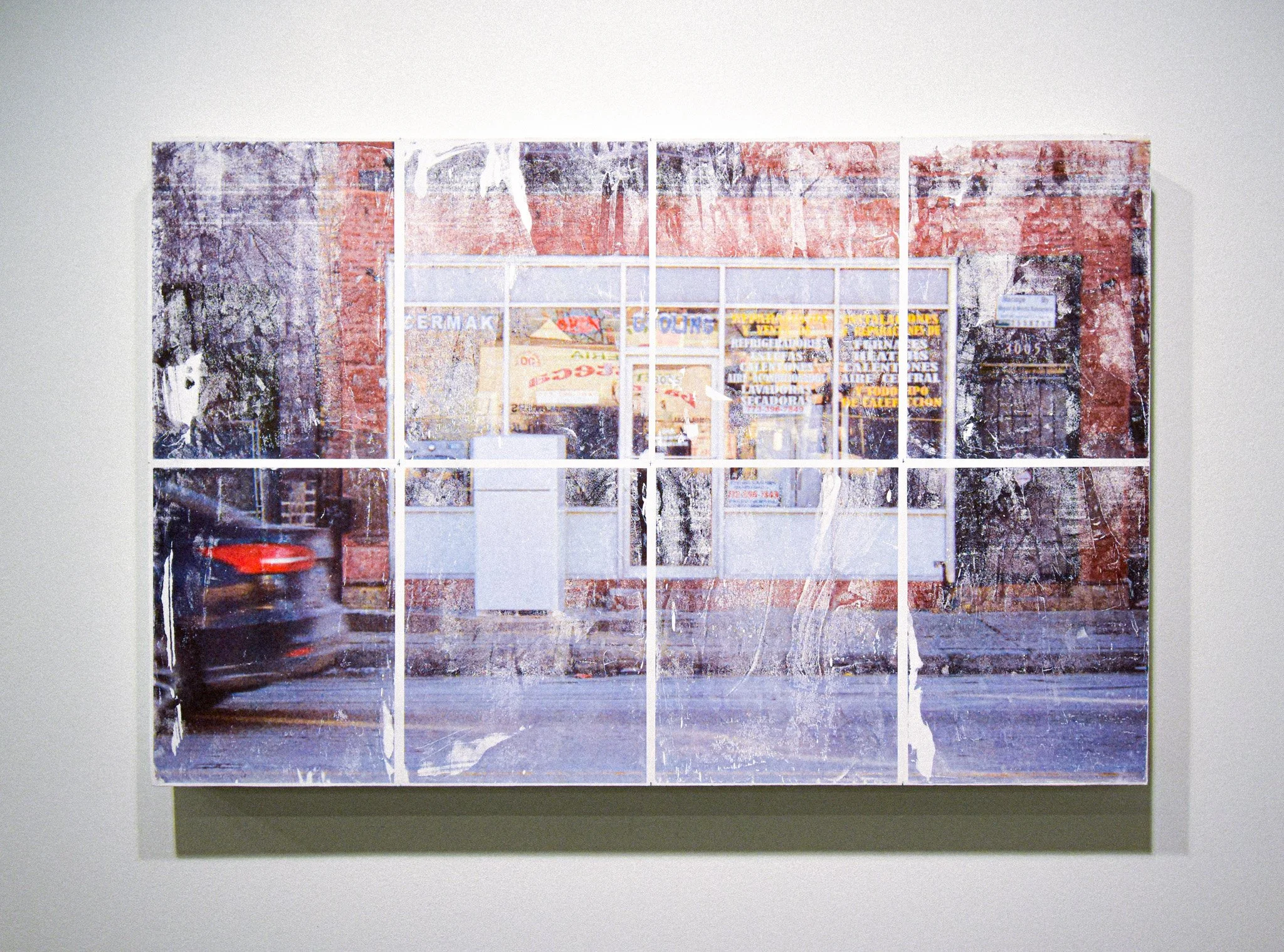
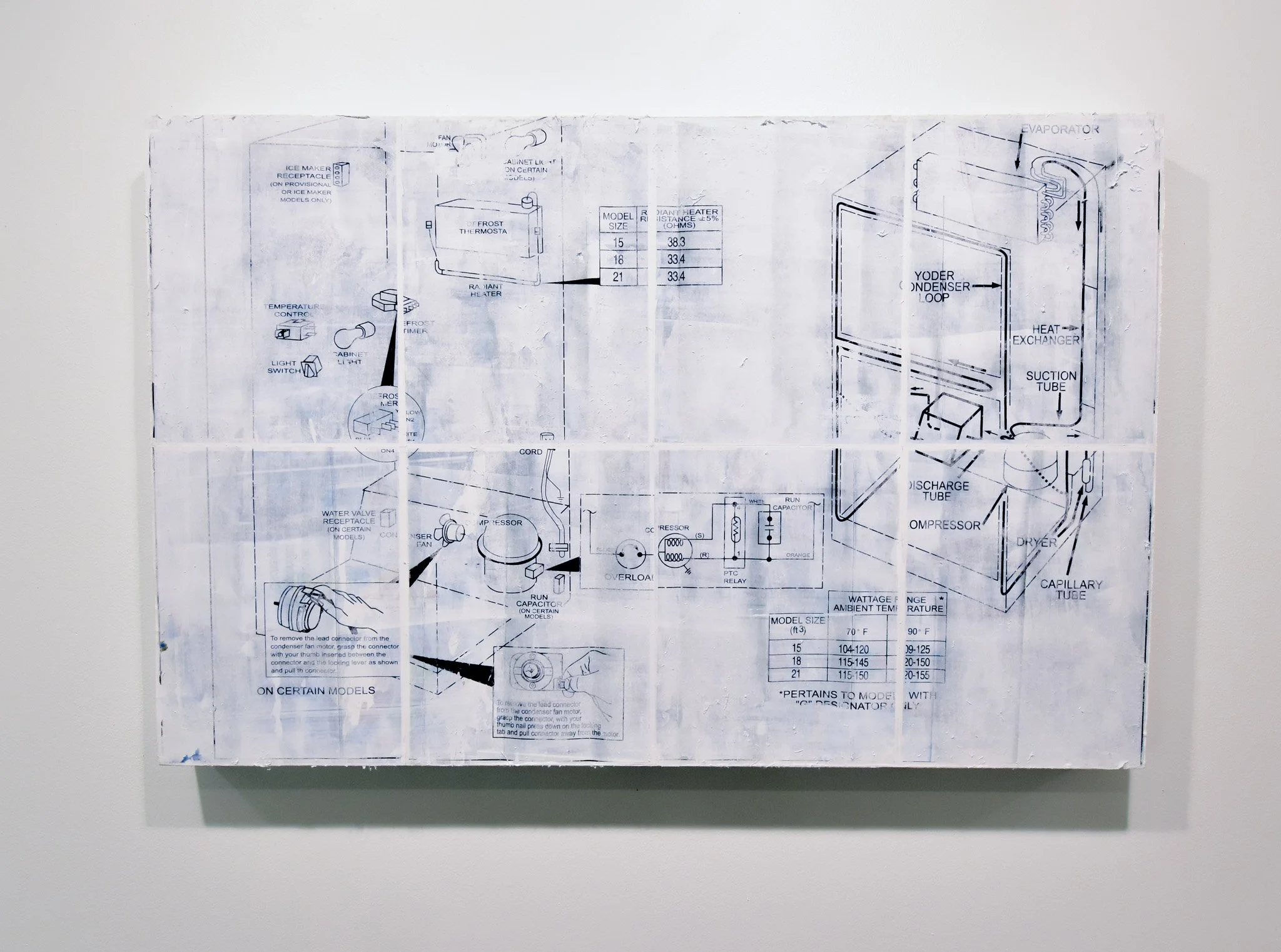
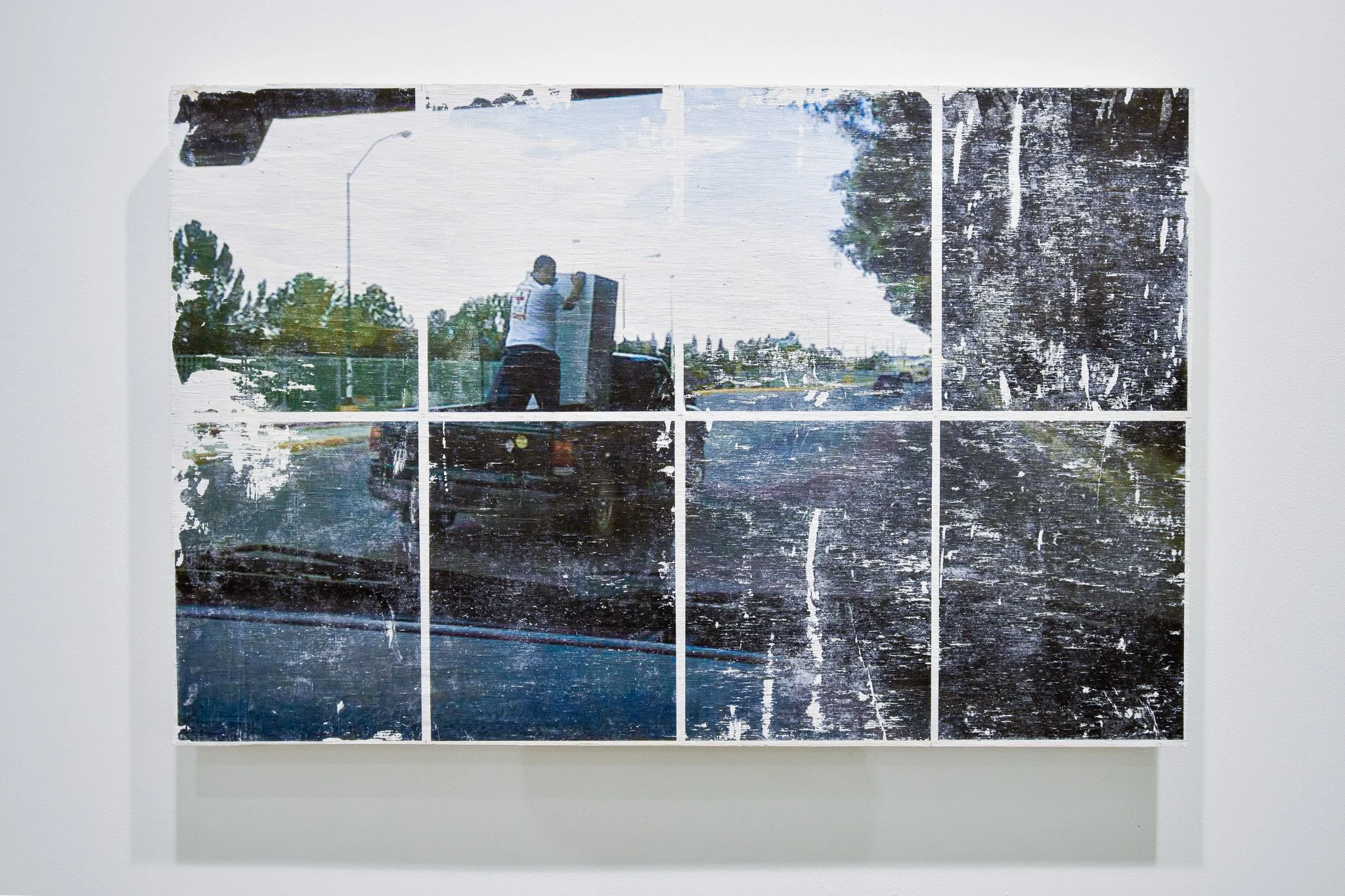
It’s the Maytag moment. I started working with it in 2015 even though the plant left in 2004. I was attracted to it as a symbol. Refrigerators are designed to preserve other things, yet my experience with the factory was about the consequences resulting from abandonment. That personal experience of irony and contradiction was something to work with, so I began to play with formal strategies of successful preservation and the sight of its failure.
All of this got stickier after the 2016 election as the losses from NAFTA factory relocations were leveraged by the far right. This turned a small body of work into a longer project where I wanted to linger with the theme of persistence through dissolution in order to explore what preservation can be beyond nostalgic restoration. The fantasies told about industry are a core interest, and I try to sit and respond to these. A lot more opens up than gets decided, and I like that about it.
Can you talk about sculpture being based in touch and the poetic nature of how you are describing this in your work?
I think this comes back to clay too. We had clay in our shop, but my dad and I would also go on walks and see exposed clay in the soil. He once scooped out a handful and made a pinch pot. He said your fingernails are one of the best tools you have. Clay was magical because it remembered every fingerprint you left, even when they were no longer visible. He had learned this from his teacher, Henry Joe, who had learned from Warren Mckenzie, who had learned from Bernard Leach. There was practical import in the formal lesson, but also the tactility of legacy — inheriting these intimate impressions left upon him through this material, his teachers, and their teachers. Clay is a medium for touch and possesses an agency for marking you in return.
A story like this sticks with me in part because it reminds me of how impressionable everything is all the time— both the impression we leave on the world we’re immersed in, but also its ongoing marking upon us. Being physical is a two-way street where you’re always in contact with multiple other people, spaces, objects, or structures. To say that we are in touch with other things is an understatement. It seems more accurate that we are of our “in–touchness.” Sculpture for me has been a way to see this at play and respond.
Where this is poetic to my mind is what happens when things are in contact. I think poetry happens when a single object can mean two more things and sustain the oscillation between them. In that oscillation, concepts inform each other, becoming more open and malleable rather than defined. For me the whole point of being an artist is to explore this mutual impressionability— to ask what we might become when we think we are making other things.
How does form and content meld in your pieces?
An object’s content comes down to how it exists in the world. When the work is strong it asserts itself. I have my research but it is not always the content of the work. However the research leads to an initial approach of working with materials, which can lead to new ways of making. But always the work has to be seen on its own formal terms as the medium for putting concepts on the move. I'm more interested in exploring that than wielding materials to say something perfectly.
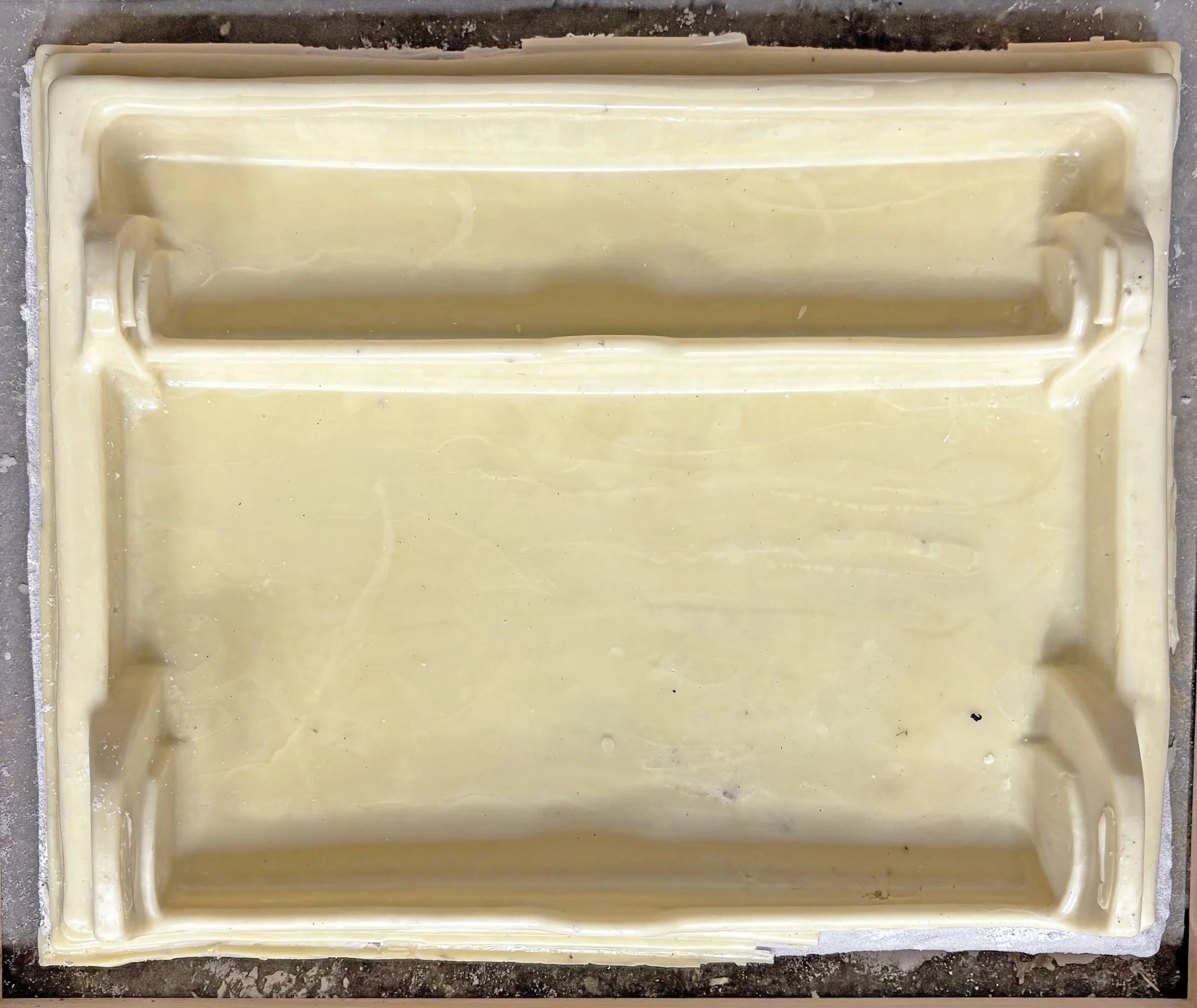
What has emerged routinely are objects and materials revealing signs of the processes they emerged from. I'm not obsessed with clean finishes. The objects show signs of life. Sometimes this is the pock-marked texture from molten metal meeting a sand mold. Sometimes it is the presentation of the humming fan that reveals an ongoing flow of energy.
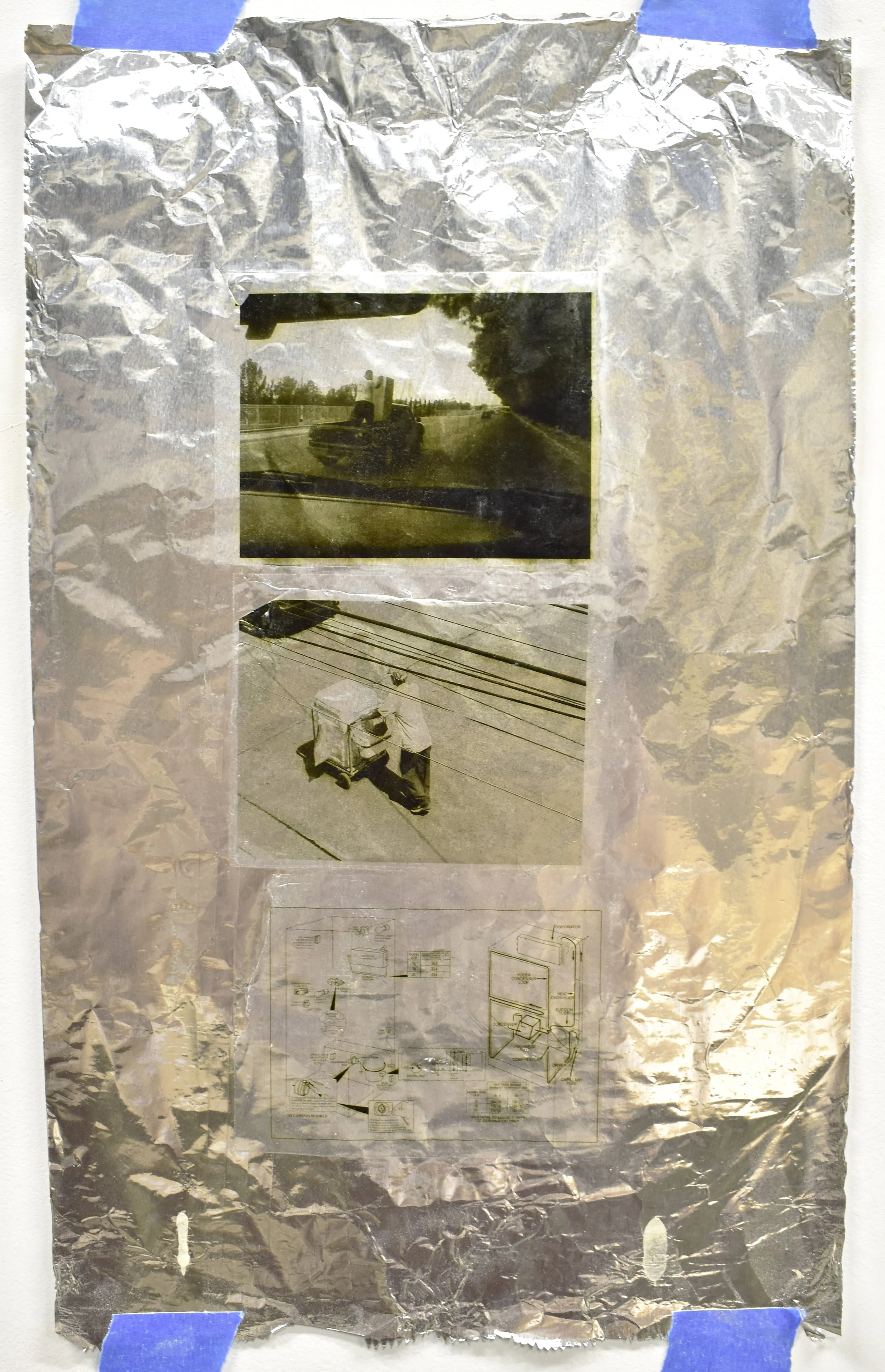
My questions revolve around dissolution, persistence, and becoming, and my objects contain an awareness of their ongoing-ness, or their unfinished qualities. I’ve chosen to work with found objects, casting, and photography because of how they can indexically show this about the world. They are a thumb print of sorts.
What songs, artists, podcasts, or rituals are inspiring you right now?
I’m a long distance runner, and I’ve been doing that for 23 years. That activity changes from season to season, and it’s been a great teacher for me. I’ve been dealing with some achilles issues, and so I’m learning a lot about patience and humility. The ritual right now is being grateful for what I can do on a given day, then doing that as a celebration of the ability. Sometimes this means walking instead of running, so I just take the camera out and walk around Pilsen or Little Village. Get a snack.