
Alejandro T. Acierto - not yet titled, from "Leveling" series

$100.00

not yet titled, from "Leveling" series, 2026

AIR 2018

Inkjet print on paper
8 × 10 Inches

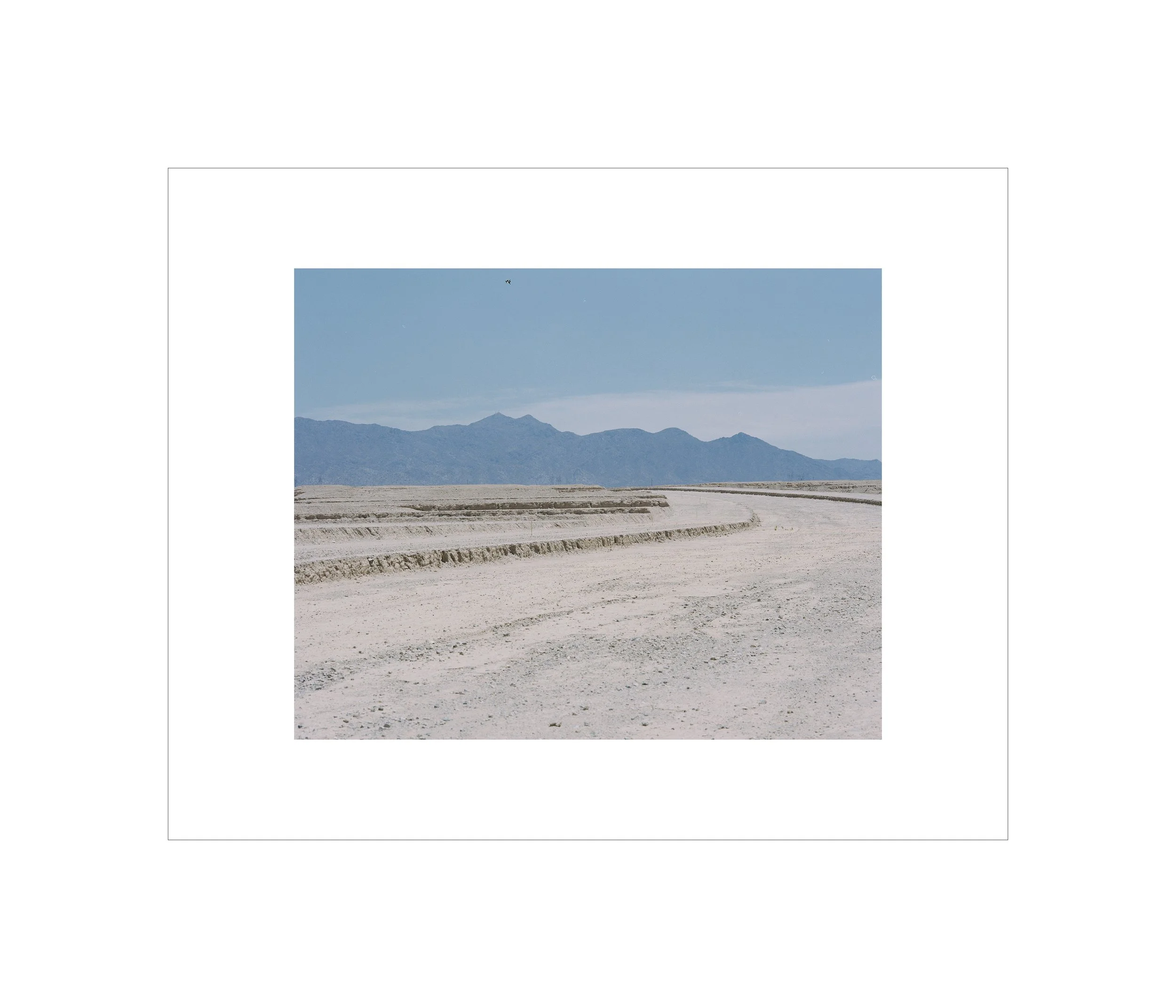
This not yet titled work from the "Leveling" series documents a large-scale housing development in the western suburbs of the Phoenix metropolitan area. Leveling a series of plateaus into the foothills of the mountainous desert landscape, this massive new housing community has reshaped over 37,000 acres of land to build nearly 100,000 new homes in the span of a few short years. Noting the precarity of water in the Sonoran desert, this project questions the conditions under which settlements occur and asks, who gets to make home in the desert?

This print is available only from September 17th - December 7th, 2026. After this date, this image will not be made available in this format again.

not yet titled, from "Leveling" series, 2026

AIR 2018

Inkjet print on paper
8 × 10 Inches

This not yet titled work from the "Leveling" series documents a large-scale housing development in the western suburbs of the Phoenix metropolitan area. Leveling a series of plateaus into the foothills of the mountainous desert landscape, this massive new housing community has reshaped over 37,000 acres of land to build nearly 100,000 new homes in the span of a few short years. Noting the precarity of water in the Sonoran desert, this project questions the conditions under which settlements occur and asks, who gets to make home in the desert?

This print is available only from September 17th - December 7th, 2026. After this date, this image will not be made available in this format again.


WORDS FROM Alejandro T. Acierto

Much of my recent work intervenes on the histories and conventions of landscape and environmentally-minded creative practices by utilizing expanded documentary forms (photography, photogrammetry, 3D modeling, assemblage, and archival research) to critically engage its content. Working conceptually between publications and built environments as installations, my work contends with the notion of “documentation” and the existent administrative/bureaucratic devises often used as evidence to justify the development of vacant, “unoccupied” land that privilege human occupation. Questioning how those environs insist upon other perspectives of “value” that reorient the land first, this recent project's multi-perspectival depiction allows for different kinds of arguments that engage new forms of right relation, ones that center Indigenous stewardship and advocate for Land Back.