
Rachel Fein-Smolinski
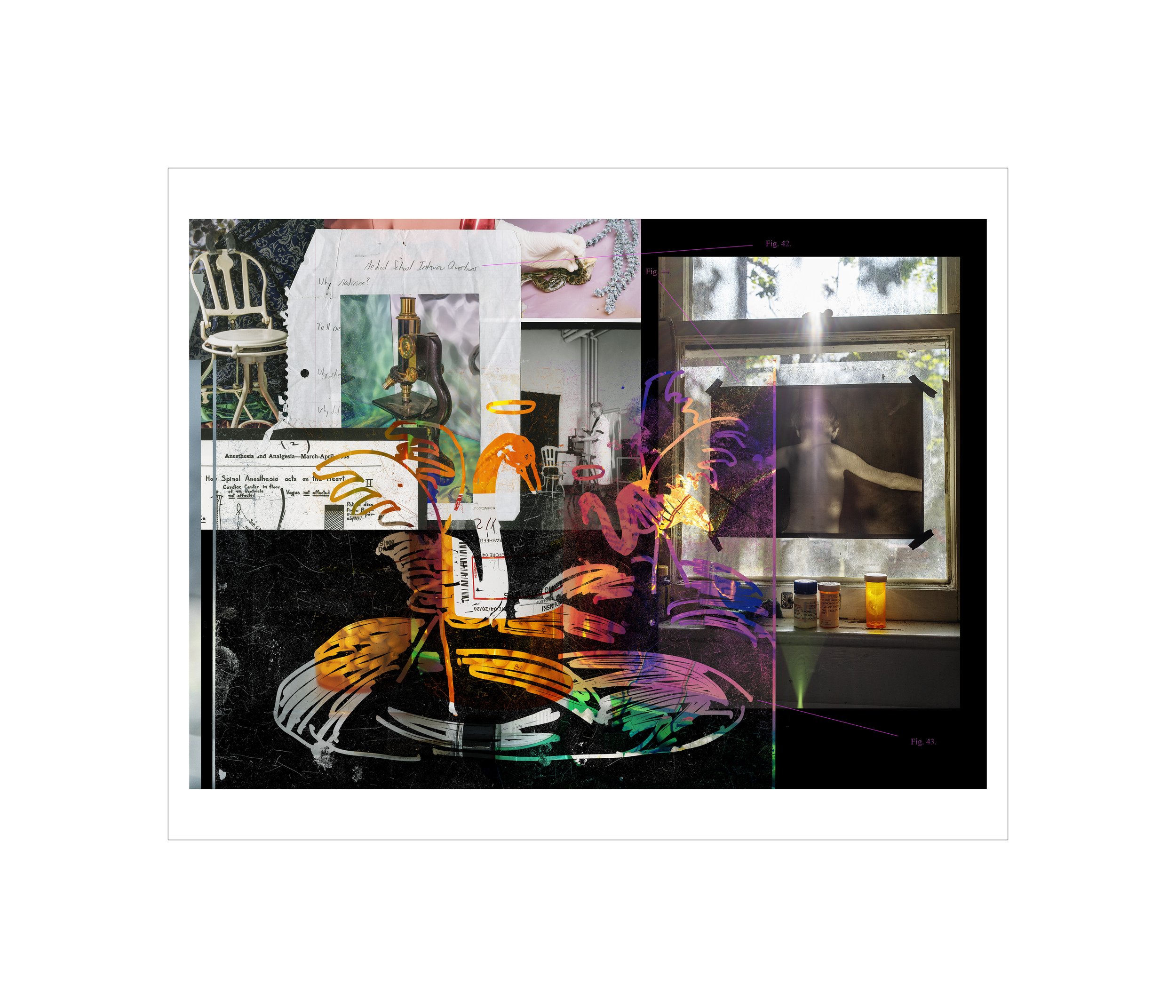
Art and medicine are estranged siblings. Photographs are good at decontextualizing their subjects from the world that they exist in. A medical exam room is good at decontextualizing a person from the world they exist in. A person becomes a patient when their first-person experience is translated into third person narrative. When looking at medical archives, the preservation of the historical context of the experiences of patients is a vital job of archivists and researchers.
I collect and make images of the visual codices of illness and share my own archive of experiences as a chronically ill person to explore mythologies of recovery. (excerpt from article: https://muse.jhu.edu/issue/50388/print)
Thoughts on the lab
I was focused on processing imagery I had collected from medical archives along with documentation of my personal and professional life with a chronic illness. Two things happened during my time at Latitude: I had to acknowledge the impact of having a disability on the speed at which I make art, because I was constantly needing to take breaks to go to physical therapy and manage medical appointments, and two, because Latitude was really good about having a board up at the entrance with a picture of my face and pronouns, it was the first time in my life that I would go full days without being misgendered and the relief that provided, the lack of need to have to come out over and over again was quite meaningful. I also had recently spent time working as The Digital Services Coordinator at Light Work in Syracuse, NY, and the opportunity to be in another lab with a similar mission but as an AIR was really helpful for me.